Insight · Published November 2026
By Marin Tintchev, Founder, GeoSynapse & China GEO EU
Your Company Can Have More Than One Name in China. They May Not Have the Same Owner.
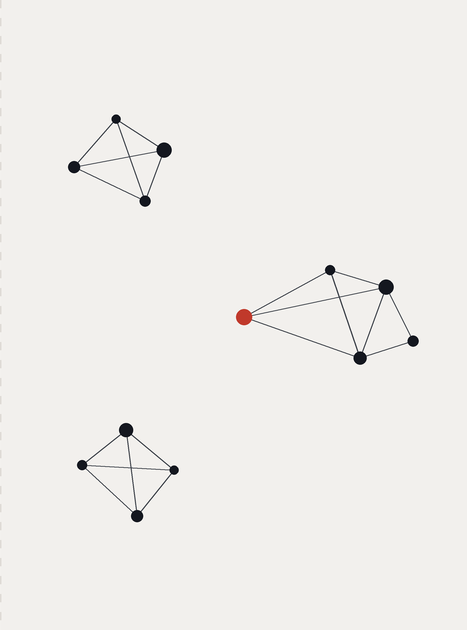
A European company can be identified in China by a Latin-letter brand, a Chinese-character name and the registered name of a Chinese legal entity, and the Chinese name also exists as a pinyin spelling. Different parties create these names, different registers hold them, and nothing ensures that they belong to the same owner. China applies a strict first-to-file principle to trademarks[1], and disputes over a Chinese name can run for years. Our interpretation is that a buyer or an AI system that meets these names one at a time has no automatic way to know they refer to the same business, and that this affects what a company's AI visibility in China looks like.
What kinds of names can represent one business in China?
Three names and one spelling tend to coexist. The first name is the brand as the company uses it at home, in Latin letters. The second is a Chinese-character name, which can translate the meaning of the brand, imitate its sound or mix the two. The third is the registered name of a legal entity in China, such as a subsidiary, a joint venture or a distributor. The spelling is the pinyin, the romanization of the Chinese characters. It writes the same Chinese name in Latin letters. It is not a separate name, and it can still be registered and used on its own.
The parties who create them differ. The company chooses its Latin brand. A Chinese-character name can be chosen by the company or, if the company has not acted first, by a distributor or business partner. Distributors and partners are among those who pre-register foreign marks[1]. The name of a Chinese legal entity is chosen by whoever sets that entity up. A brand is protected, if at all, through a trademark registration. A company name is registered when the legal entity is formed, and the register that lists it is run by the State Administration for Market Regulation and is searched by the legal Chinese name[2]. The two records sit in different registers and answer different questions: who owns the mark, and who the legal entity is.
INTERPRETATION
A buyer may see the Latin brand in a presentation, a Chinese name on a quotation and a company name in a register. A match between two of them in one record does not show a legal link between them. The link has to be shown with documents.
Who gets to choose the Chinese name?
Whoever files first generally obtains the registration, although the same source describes the rule as not absolute[1]. For applications filed on the same day, the national trademark office's March 2026 guidelines use earlier use of the mark as the first test, then agreement between the applicants and, failing that, a draw[3]. Exceptions exist, and they are not new. The agent and business-partner rules are in Article 15 of the current Trademark Law[4] and carry over as Article 22 of the revision adopted on 26 June 2026 and in force from 1 January 2027[5]. An agent or representative may not register the principal's mark in its own name without authorisation. If the principal opposes, the application is refused and the agent is barred from using the mark[5]. A party with a contract or business relationship that knowingly registers another's earlier unregistered mark is refused registration for the same or similar goods if the other party objects[5]. Foreign applicants must file through a licensed trademark agency. The current law already requires this of any foreign person or enterprise, and the revision limits it to applicants with no habitual residence or business office in China[4][5].
The revised law adds sanctions for abusive filings. The current law already refuses applications that are not intended for use (Article 4), and Article 19 of the revision rewords the test: an application is refused if it is not intended for use and clearly exceeds normal business needs[4][5]. Article 54 provides a warning and possibly a fine of up to RMB 100,000 for listed malicious filings that cause adverse effects[5]. Article 21 addresses well-known marks. For the same or similar goods it bars registering a copy, imitation or translation of another's well-known mark that is not registered in China, if this is likely to cause confusion. For goods that are not similar it bars the same conduct where it would mislead the public and the holder's interests could be harmed[5].
INTERPRETATION
The practical point is timing. The exceptions and the new sanctions act after a filing exists. They give a European company arguments once a dispute has begun, and they do not prevent another party from filing a Chinese name first. In the ChildLife case below, the claims based on the agent rule had been rejected as filed out of time, and the registration fell on a different ground. The text of the revision does not say how applications pending on 1 January 2027 will be treated, and no decision under it exists. This is general information and not legal advice.
What happened when a distributor's side registered the Chinese name?
One documented case involves ChildLife, a US children's supplement brand, and its Chinese distributor. The brand owners are Biozeal LLC and Murray Colin Clarke. According to the UK decision, the distribution relationship began around 2009 or 2010 and ended on 23 March 2021[6]. The distributor, Nanjing TNSG Biotech, filed the Chinese name 童年时光 (tong nian shi guang) as a trade mark in China on 20 April 2010, almost eight years before the 2018 distribution agreements that contain a clause on registrations[6]. The product is a consumer good, but the dispute is between a brand owner and a distributor.
A law firm's report says that on 25 July 2025 the EUIPO Cancellation Division declared invalid, for bad faith, the EU trade mark 018105147 for 童年时光, held by TNSG Health Co Ltd, in a case brought by Biozeal LLC. According to the report, the 2018 distribution agreement barred registering any version of the marks, including translations, and TNSG Health had filed the EU application in August 2019, while the agreement was in force[7].
TNSG Health is a UK company that the UK decision treats as closely connected with the distributor. On 20 October 2025 the UK Intellectual Property Office decided that its UK registration of the same Chinese name was made in bad faith and is invalid. A separate claim under the agent provision was dismissed, and no report of an appeal was found[6].
In Singapore, the distributor opposed Clarke's application to register 童年时光. The Intellectual Property Office of Singapore dismissed the opposition on 22 October 2025. The adjudicator found that the mark was presented as the Chinese version of CHILDLIFE and that the distributor's marketing spending did not show that it owned the mark[8].
The EU, UK and Singapore decisions apply their own laws, so the outcome in China comes from the Chinese courts. In November 2024 the Beijing High People's Court upheld the invalidation of the distributor's registration no. 8223462, finding that it had been obtained by other improper means, and noting more than 290 registered trade marks in 42 classes. The trademark office had rejected the claims based on the agent rule as filed out of time[9]. On 31 December 2024 the Zhejiang High People's Court, in an infringement and unfair-competition case, held that the Chinese name belonged to the CHILDLIFE brand and ordered the distributor and an individual to pay RMB 50 million jointly[10]. Neither judgment shows who holds the distributor's other registrations.
INTERPRETATION
On its main claim, the brand owner prevailed in every proceeding described here, on grounds that included the distribution contract, how the name was presented and used and, in Beijing, the volume of the distributor's filings. The distributor, which was first to file in China, lost that registration and, in Zhejiang, its claim to the name. Fourteen years passed between that filing and the 2024 judgments, and the same Chinese name was contested in several jurisdictions. One case illustrates the mechanism and does not show how such disputes usually end.
Are Chinese characters and pinyin legally equivalent?
Not in every case. In December 2016 the Supreme People's Court ruled in ten trademark cases between Michael Jordan and the Chinese sports brand Qiaodan. It sent the three cases about the characters 乔丹 back for a new decision and dismissed the seven about the pinyin QIAODAN, because Jordan held no personal-name right in the pinyin[11]. These were personal-name cases and they do not say how a company's Latin, Chinese and pinyin names are treated. They show that characters and pinyin can be assessed separately, so a company that has secured one form should not assume that it covers the other.
What does a split identity mean for AI visibility in China?
INFERENCE
An AI system is likely to answer from what it finds under the name in the question. A buyer who types the Chinese name may therefore get an answer built from the material written about that name, whoever wrote it and whoever owns it.
FACT
A 2026 preprint on four Chinese generative search products (Doubao, DeepSeek, Tencent Yuanbao and Qwen) analysed 160,860 cleaned records. Among the citations classified by source type, news media accounted for 28.8%, vertical portals for 24.1%, social media and creators for 16.4% and brand websites for 12.9%[12]. The 614 queries covered 21 industries, including consumer topics and health, law and finance, and some concerned brands. The study is observational. Its figures describe the sample and do not show who wrote the material cited for any particular company.
Consider a hypothetical German pump manufacturer, the kind of supplier a buyer in Shenzhen may check before a first call, as we described in "From Stuttgart to Shenzhen: Before the First Call, Your Buyers May Already Have Asked AI About You". Its Latin brand appears on its own website and in trade fair catalogues. Years ago its distributor in Suzhou began selling under a Chinese-character name and later filed that name as a trademark. The distributor also set up the company that appears in the register. Now a buyer asks a Chinese AI assistant, in Chinese, about the supplier under that Chinese name. The case is invented to show the mechanism.
INFERENCE
Among the possible outcomes are four. The answer may describe the distributor, with its company record, customers and reviews, and the buyer may read it as the manufacturer's track record. The answer may find nothing that connects the Chinese name to the Latin brand, so that the buyer sees two businesses and the manufacturer's own website is no part of the picture. The answer may surface a dispute, if the two parties fell out, because decisions and law-firm reports like those above print the Chinese name next to the names of the parties. Or the buyer may ask under the Latin name and receive the manufacturer's material without the Chinese-language material that the distributor generated. The systems may also connect the names correctly, which this article cannot rule out. The risk applies where the manufacturer has not registered the Chinese name and the distribution contract does not cover it. Outcomes one to three leave the buyer with an incomplete or wrong picture at the moment of first contact. These outcomes are possible. None has been observed. No published study that tested whether Chinese AI systems link a European brand, its Chinese name, the pinyin and the legal entity was found.
For the company, the consequence is that the story a buyer meets before the first call may be written by someone else, and that a good result under one name says little about the others. The AI answer is also not stable. Answers vary between runs, as we describe in "Why AI Answers Change Between Runs — And What That Means for Measuring Visibility", so a single check proves little.
A first check needs no special tools. Before the first call, ask the partner for its Chinese name, its trademark registration certificate and the licence or distribution agreement that links it to the mark. Then list every identifier the business has in China: the Latin brand, each Chinese-character name, the pinyin and each legal entity. For each, find out who owns it, using the trademark register and the company register. Searches in Chinese registers need someone who reads Chinese and is independent of the distributor. Finally ask Chinese AI assistants and search engines about the business under each identifier, in Chinese, several times, and read which business the answers describe, whose products and customers they mention and whether any dispute appears.
INTERPRETATION
Where the company controls its own website and official records, it can state which names and entities belong together. Nothing shows that this makes an AI system link them, and brand websites made up a small share of the classified citations in the study. It does remove one possible cause of confusion, and it gives a buyer or a lawyer a document to check.
How does a strategy for AI visibility in China differ from one for a Western market?
In China a strategy for AI visibility begins with the questions of which names exist, who owns them and where they are recorded, before content and keywords. Four features of the Chinese setting explain why.
FACT
The same foreign brand can carry different Chinese names inside the Chinese-speaking world. One branding article, first published in 2009 and updated in 2023, gives examples such as Lexus, which is 雷克萨斯 on the mainland and 凌志 in Hong Kong, and Mazda, which is 马自达 on the mainland and 万事得 in Hong Kong. It attributes the differences to Mandarin and Cantonese pronunciation and to market-specific naming choices, and notes a trend toward a single name[13]. Homonyms and words with several readings make Chinese brand names harder to settle[14].
FACT
Script adds another layer. Taiwan writes in traditional characters and the mainland in simplified ones. A 2025 benchmark of 11 language models found that most were more often correct on regional terms when prompted in simplified characters, and that all of them gave more answers in the mainland form when the prompt was in traditional characters. The authors attribute this partly to the imbalance of training data between the two scripts. The test covered everyday terms and personal names, not brands, and only the mainland and Taiwan[15].
INFERENCE
A Chinese name written in two scripts may be handled as two different strings by systems like these.
FACT
Names also arise outside the company. In a case described by the World Trademark Review, a distributor's Chinese name for a foreign beer brand, 老米勒, became popular in northern China. It could not be registered because of a conflict with 米勒, so the owner registered 老米乐 instead, and the distributor's name stayed in consumers' minds despite campaigns, at the cost of oppositions and invalidations[14].
FACT
The legal entity's name follows rules of its own. A Chinese company name must use standard Chinese characters[16][17], and a foreign-language version of the name, where one is used, is a translation of the Chinese name[17]. A secondary source describes the usual structure as an administrative division, a distinctive trade name, an industry term and an organizational form[18]. A foreign-invested company whose name includes "(China)" must use a trade name consistent with the translation of the foreign investor's name or trade name[17]. A register entry may therefore carry a city and an industry word and no Latin spelling, and it may or may not resemble the brand. In ChildLife, the distributor's company name contains the Chinese mark itself[9].
INTERPRETATION
A strategy for China starts with an inventory of identifiers across the mainland, Hong Kong and Taiwan, of the legal entities, of who owns each and of the documents that link them, such as a licence or a distribution agreement. It then looks at the news media, portals and social channels that write about them, which accounted for the largest shares of the citations in that study[12], and only after that at content. A plan built on one brand and one spelling would skip the first step. The question for a company is which company stands behind each name, and which relationship links it to the holder of the mark.
References
- Monica Li, "Addressing Prior Trademark Filings in China: Strategies for Market Entry," China Briefing (Dezan Shira & Associates), 31 December 2025 — china-briefing.com.
- Meng Yu, "How to Check China Company Registration Number," China Justice Observer, 11 May 2022 (describes the National Enterprise Credit Information Publicity System of the State Administration for Market Regulation) — chinajusticeobserver.com.
- China National Intellectual Property Administration (CNIPA), guidelines on same-day trademark applications, 17 March 2026 — english.cnipa.gov.cn.
- Trademark Law of the People's Republic of China, text as amended in 2019 (CNIPA publication) — cnipa.gov.cn.
- Trademark Law of the People's Republic of China, revised text adopted by the Standing Committee of the National People's Congress on 26 June 2026, in force from 1 January 2027 (CNIPA publication, in Chinese) — cnipa.gov.cn.
- UK Intellectual Property Office, decision O/0977/25, 20 October 2025 (Clarke and Biozeal LLC t/a Childlife Essentials v TNSG Health Co. Ltd.) — ipo.gov.uk.
- Baker McKenzie, report on the EUIPO Cancellation Division decision of 25 July 2025, Biozeal LLC v TNSG Health Co Ltd (EUTM 018105147), 16 January 2026 — bakermckenzie.com.
- Intellectual Property Office of Singapore, TNSG Biotech Co Ltd v Murray Colin Clarke [2025] SGIPOS 5, 22 October 2025 — ipos.gov.sg.
- Beijing High People's Court, administrative judgment (2024)京行终4132号, November 2024 (full text as published on the website of the brand owner, a party to the dispute) — childlifenutrition.com.cn.
- Zhejiang High People's Court, "Typical intellectual property protection cases of Zhejiang courts in 2024," case 3, judgment (2024)浙民终145号 of 31 December 2024, published 17 April 2025 — m.thepaper.cn.
- Supreme People's Court of the PRC, press release on the judgments in the Michael Jordan trademark retrials, 9 December 2016 — court.gov.cn.
- Zhen, Liu, Zhang and Niu, "What Do Chinese-Language Generative Search Engines Cite and Surface? A Large-Scale Empirical Study," arXiv:2607.15771, July 2026 — arxiv.org.
- Labbrand, "Brand Naming Differentiation in Greater China: Examples from the Automobile Industry" (first published 2009, page updated 2023) — labbrand.com.
- Cindy Zhen, Jack Su and Sisi Liang (LingHui Partners), "Translation and transliteration of brands in the Chinese market," World Trademark Review, Inside China's IP Market: a Guide 2025, 18 November 2024 — worldtrademarkreview.com.
- Hanjia Lyu, Jian Kang, Allison Koenecke and Jiebo Luo, "Characterizing Bias: Benchmarking Large Language Models in Simplified versus Traditional Chinese," ACM FAccT 2025, arXiv:2505.22645 — arxiv.org.
- Administrative Provisions on Company Name Registration (State Administration for Market Regulation), in force from 1 March 2021, Article 5 (published text in Chinese) — scjgj.cq.gov.cn.
- Implementing Measures for the Administrative Provisions on Company Name Registration (State Administration for Market Regulation), in force from 1 October 2023, Articles 7 and 15 (JETRO translation) — jetro.go.jp.
- Arendse Huld, "China Company Name Registration: New Measures Clarify Standards and Application Procedures," China Briefing, 20 September 2023 (on the Implementing Measures in force from 1 October 2023) — china-briefing.com.
Frequently asked questions
Is pinyin a separate company name?
No. Pinyin is the romanization of Chinese characters, a way of writing the same Chinese name. It can be registered or used on its own, and in the Jordan cases the Supreme People's Court reached different results for the characters and for the pinyin. A company's registered legal name is a different matter and sits in the company register, not in the trademark register.
Does registering the Latin-letter mark automatically protect its Chinese translation?
No. A registration covers the mark as filed. Article 21 of the revised Trademark Law addresses translations of well-known marks only. Which Chinese name a company can rely on depends on who filed it, what relationship the parties have and how the name has been used, as the ChildLife case shows. This is general information and not legal advice.
Does this article show how Chinese AI systems connect these names?
No. No published study that tested this specific linkage was found. The article describes how the names arise, who controls them and how disputes over them have gone. Its section on AI visibility sets out the possible effects on AI answers as inferences and describes a first check a company can run itself.
Related insights
Insight
Beyond B2B vs B2C: Does Your AI Visibility Strategy Fit Your Business?
B2B or B2C says who the transaction is with, not whose questions an AI system must answer. A four-layer way to look at AI visibility.
Research
From Stuttgart to Shenzhen: Before the First Call, Your Buyers May Already Have Asked AI About You
In Europe and in China, the buying committee turns to AI first. What differs is where it checks the answer. A review of Western and Chinese surveys.
Insight
We Grew a B2C Business on AI Visibility, from Scratch. How Does It Work in B2B?
A yacht business grew from scratch on AI visibility. We then ran the same method on a B2B company with no ads: baseline audit, foundations, re-audit.
About the author
Marin Tintchev is the founder of GeoSynapse and China GEO EU. He has 30+ years in ICT and international business across China and Europe, was educated at Tsinghua University, and is fluent in Mandarin.